

In a world often divided between "thinkers" (urban planners & designers) and "doers" (builders), Stephen Burton stands at the intersection.
As the Founder and Director of POMO, Stephen has refined a unique methodology: Narrative Driven Creative Infrastructure. His work starts with deep place based research and conversations with communities. He interprets narratives and aspirations through the process of bespoke creative design and into the technicalities of industrial fabrication and construction. His work bridges the gap between high-level strategy and the tactile reality of creating nuanced, creative places that tell stories and reflect the hearts and minds of communities.
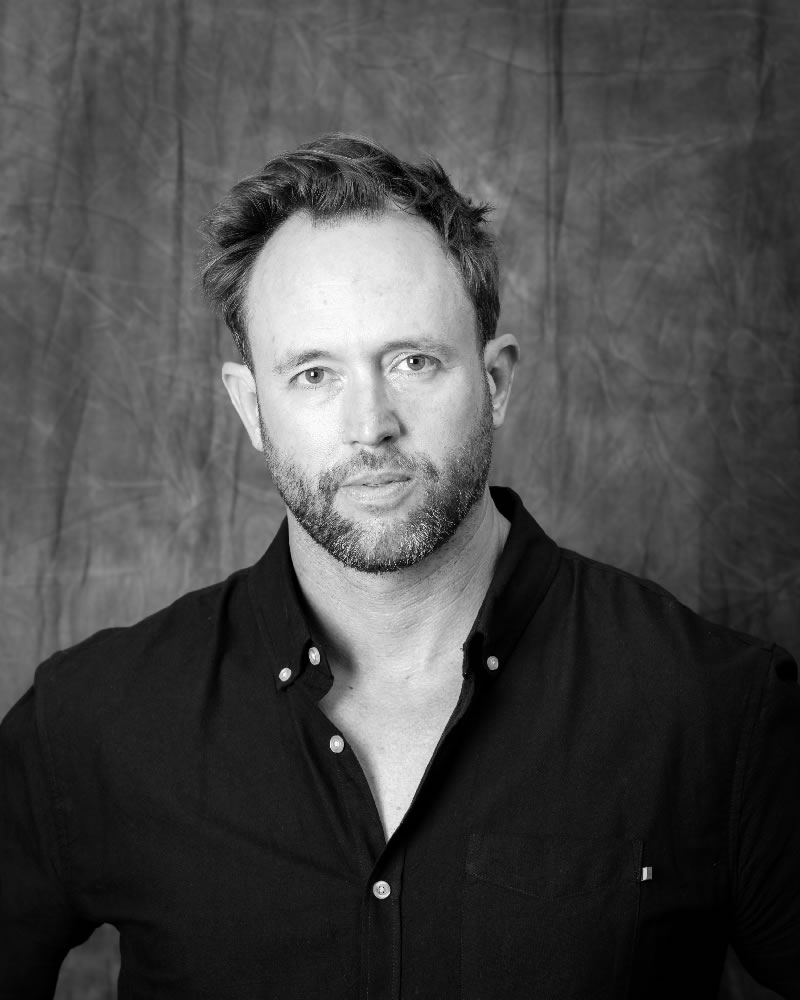
Stephen is a sought-after voice on the future of Australian placemaking and the role of creative placemaking in renewing public places. He advises local government and the private sector on how to create places that are cherished by communities. He is the host of The Placemakers, Spotify's only dedicated placemaking podcast.
Stephen Burton is the founder and creative director of POMO, a practice specialising in the strategic design and delivery of creative placemaking and public realm infrastructure. Since establishing the studio in the late 1990s, Stephen has shaped its evolution beyond the design of individual objects toward the design of place-based experiences where cultural narrative, community insight, and physical form converge.
His work focuses on uncovering the unique DNA of a place, its history, ecology, and social context, and translating that understanding into creative built outcomes that help create successful public places. This approach positions his work as essential infrastructure for belonging.
Stephen holds undergraduate degrees in Arts (Media and Culture) and Law (Honours), postgraduate qualifications in Urban Design and Planning, and has undertaken further study in Art History and Theory.
As POMO’s Senior Technical Designer, Alok transforms creative narratives into high-precision industrial realities utilising state-of-the-art CAD software and modeling.
He acts as the critical bridge between conceptual vision and technically sound delivery. Alok ensures complex stories are translated into buildable, durable infrastructure.
Nathan works at the intersection of digital systems and user experience, translating strategic intent into stable, functional digital environments. His focus is on the underlying structure of digital projects—designing the frameworks that support clarity, usability, and long-term performance, even when those systems remain largely invisible to users.
He approaches digital work as a problem-solving discipline, analysing goals, constraints, and user pathways to define efficient and coherent solutions. By shaping the hidden architecture of digital platforms, Nathan ensures that the visible experience is intuitive, resilient, and fit for purpose.
Nathan holds a Certificate IV in Website Design and Development and a Bachelor of Interactive Media from QUT.
POMO occupies the critical niche between high-level urban strategy and fine-grain bespoke physical delivery. Unlike traditional consultancies that stop after the engagement or concept phase, we solve the "Implementation Gap" ensuring community aspiration or visions are translated into creative yet constructible reality. Our end-to-end methodology bridges the divide between landscape architecture, art and industrial design. We don't just design; we document, certify, and handle the building and fabrication of bespoke creative elements in the public domain.
We have a community engagement process that brings people together around a shared vision, whether this be community members or internal stakeholders. We use place narratives, culture, and place identity to develop unique “people and place” focused outcomes. We collaboratively develop the engagement program with our clients, and where relevant, thread those engagement outcomes through a design and delivery process and into tangible outcomes.
We uncover the unique DNA of a place. Our strategies combine historical ecology, social psychology, consultation and economic analysis to create a roadmap for revitalisation. We align high-level urban planning with on-the-ground reality, ensuring projects are socially sustainable and place appropriate.
Evidence has shown that public art is a critical layer of the built environment that connects people to place and drives visitation. We create site-specific, narrative-driven public art that reveals a location's unique DNA, often celebrating its history, ecology, and cultural identity.
We collaborate with a range of trusted art makers, technical specialists and tradespeople to bridge the gap between conceptual vision and physical reality. We work with local government, developers, communities, architects and other stakeholders, often as the overall project lead for design and delivery.
Because we manage the entire lifecycle from community or stakeholder engagement through to design, fabrication and complex installation, we de-risk the process for our clients. The result is high-quality public art that fosters a deep sense of belonging, drives local economic value, and leaves a meaningful legacy.
We specialise in maintaining a "strategic thread" from the first community workshop through to the final built outcome. Our co-design process creates a unified vision among diverse stakeholder groups, often bridging the gap between constraints and community aspirations. Our facilitation moves beyond brainstorming; we use design-thinking methodologies to produce technical constraints and opportunities (C&O) mapping, ensuring ideas are feasible and budget-aligned.
POMO is frequently engaged by government bodies to author Place-Driven Design Guidelines that become endorsed Council documents or feed into statutory publications. We translate intangible "place character" into frameworks that ensure future built environments respect local place identity. These documents serve as the "guardrails" for urban renewal, giving developers and planners a clear set of metrics for materiality, form, and cultural interpretation.
We act as the client's representative, ensuring the creative vision is delivered on time and on budget. We bridge the gap between the design team and the construction team, managing contractors and fabricators to ensure quality and integrity are maintained throughout the delivery process.
We deliver Integrated Interpretive Design Outcomes that function as critical creative streetscape or other public infrastructure. We collaborate with makers, artists, specialist tradespeople and fabricators. Our work is often aimed at building capacity in the regional or local creative economy, merging functional utility with deep storytelling.
We design and deliver bespoke interpretive and wayfinding signage, often integrating cultural and historical storytelling. We believe legibility equals economic vitality, and we create systems that improve dwell time and deliver on place meaning. We combine place research, stakeholder engagement, and narrative design to create clear, intuitive visitor journeys. We develop interpretation hierarchies (from high-impact “hero” moments to subtle trail cues), balance storytelling with safety and accessibility requirements, and translate cultural and historic knowledge into respectful, legible built forms. We have experience in integrating digital layers (QR, geo-locative content, smart city interfaces) and specify materials suited to each environment. We generally manage the entire process from consultation and research to engineering certification, fabrication and installation but can do any one or more components of this process.
Have you secured state or federal grant funding for a placemaking or urban renewal project? Bridging the gap between winning a grant and delivering physical public infrastructure is a complex challenge. We partner directly with local governments, councils, and community groups to translate grant funding into built reality.
Operating under a rigorous methodology, we de-risk your project from day one. We manage the entire end-to-end process from mandatory community consultation and strategic place analysis, through to bespoke design, engineering, and final fabrication and installation. Whether you have funding for streetscape revitalisation, public art, or tactical urbanism, our team ensures your grant dollars are spent effectively, meeting strict government compliance, budget constraints, and delivery milestones. We turn your funding into highly durable, narrative-driven infrastructure that leaves a lasting legacy.
The design of our POMO studio (which you can read about here) won the Most Sustainable Commercial Building Design Award (Sunshine Coast) at the 2015 at the BDAQ design awards. It went on to be judged by Kevin Mcleod for the national sustainability award later that year. Other awards include gold and bronze at the international W3 awards.
View our projects
Vunilagi: A Prototype for Regenerative Placemaking and Remote Pacific Housing Solutions

Vunilagi: A Prototype for Regenerative Placemaking and Remote Pacific Housing Solutions
Vunilagi represents a sophisticated application of regenerative placemaking, which is a cutting edge field currently evolving to move urban development beyond the limitations of standard sustainability. While traditional development often focuses on harm reduction, this prototype project acts as a functional catalyst for net positive outcomes in Marou Village, Fiji.
Palmwoods Town Square: Delivering Community Identity through Creative Placemaking - Bespoke Urban Infrastructure
Palmwoods Town Square: Delivering Community Identity through Creative Placemaking - Bespoke Urban Infrastructure
For decades, the physical centre of Palmwoods was defined by a sloping asphalt car park that offered utility but no community connection. The Sunshine Coast Council identified the need to transform this functional void into a genuine town square.
The challenge was not simply to build a modern park, but to deliver a “civic heart” that felt established and authentic. The community did not want a generic urban upgrade; they demanded a space that reflected the town’s timber-getting history and agricultural heritage. The mandate was to create new infrastructure that felt like it had been there for a century and fit with the historical buildings that surrounded it.
Miles Main Street Revitalisation: Regional Placemaking & Urban Renewal
Miles Main Street Revitalisation: Regional Placemaking & Urban Renewal
Regional town centres often struggle with generic urban design that fails to resonate with local history or encourage economic “stickiness.” In the heart of the Western Downs, the town of Miles required more than a standard streetscape upgrade; it needed a strategic revitalisation that could express its unique cultural heritage while fostering a renewed sense of community pride.
Southport Broadwater Play Attraction: Delivering Place-Based Creative Play Infrastructure
Southport Broadwater Play Attraction: Delivering Place-Based Creative Play Infrastructure
Destination playgrounds are increasingly vital for urban activation, but they often rely on off-the-shelf equipment that lacks connection to place. For the Southport Broadwater Parklands, the City of Gold Coast required an iconic play attraction that was not only fun but deeply rooted in the ecological narrative of the Broadwater Estuary.
Landsborough Main Street Revitalisation: Driving Regional Identity through Creative Infrastructure
Landsborough Main Street Revitalisation: Driving Regional Identity through Creative Infrastructure
POMO was engaged to work alongside the Sunshine Coast Council in the renewal of Cribb Street - Landsborough’s main street. The project was part of a larger master planning process being run by council.
Specifically we participated in the community engagement process to help ascertain community attitudes and expectations around the revitalisation project.
108 Wickham Street: Delivering Strategic Creative Placemaking in Fortitude Valley
108 Wickham Street: Delivering Strategic Creative Placemaking in Fortitude Valley
Fortitude Valley is one of Brisbane’s most dynamic commercial precincts, yet the public realm between 100 and 108 Wickham Street had become a fragmented and underutilised thoroughfare. The asset owners required a repositioning strategy to transform this void into a high-value “third space” for tenants and the public.
Sippy Downs Entrance Statement: Creating Place-Led Infrastructure
Sippy Downs Entrance Statement: Creating Place-Led Infrastructure
Sippy Downs serves as the gateway to the Sunshine Coast’s primary knowledge precinct, housing the University of the Sunshine Coast and various schools. The challenge was to define this precinct through a compelling entry statement situated at a major intersection upgrade. The project required a design that not only marked a physical threshold but also articulated the area’s identity as a hub of education and biodiversity.
Mackay Place Strategy: From Vision to Activation
Mackay Place Strategy: From Vision to Activation
Mackay’s City Centre and Waterfront were facing a common regional challenge: despite significant investment in infrastructure, the public realm lacked the “stickiness” required to drive economic activity. The opening of a nearby major shopping centre and changing consumer habits had drained life from the streets.
Nambour CBD Creative Renewal: Activating the Night-Time Economy
Nambour CBD Creative Renewal: Activating the Night-Time Economy
For regional centres like Nambour, the “night-time economy” is often hampered by poor lighting and a perception of disjointed safety. The town required a strategic intervention to shift the public realm from a transit corridor into a destination that felt safe, vibrant, and welcoming after dark.
Dura Gunga: Delivering First Nations Cultural Art as Public Infrastructure
Dura Gunga: Delivering First Nations Cultural Art as Public Infrastructure
Integrating authentic First Nations narratives into civic infrastructure requires more than just artistic vision; it demands a rigorous delivery framework that respects cultural protocols while meeting public safety standards. For the entrance to the new City Hall in Maroochydore, the Sunshine Coast Council required a landmark piece that would permanently embed the Gubi Gubi story into the built environment.
Nambour Community Revitalisation: The 100% Bottom-Up Model
Nambour Community Revitalisation: The 100% Bottom-Up Model
Nambour was suffering from a distinct form of regional fatigue: a perception of “too much talk, not enough action.” Despite multiple government-funded planning initiatives, the town remained in economic decline, plagued by high business turnover and social dislocation.
C-Square Precinct Wayfinding: Creating Legibility in Complex Urban Environments
C-Square Precinct Wayfinding: Creating Legibility in Complex Urban Environments
Located in Nambour on the Sunshine Coast, the C-Square precinct presented a significant urban design challenge. Characterised by a confusing “matrix” layout and difficult sightlines, the precinct suffered from low pedestrian permeability. Visitors were frequently unaware of key amenities, including a concealed elevator and transit connections, which directly impacted the economic viability of upper-level tenancies.
High Street Armadale: Strategic Temporary Activation
High Street Armadale: Strategic Temporary Activation
High Street Armadale is one of Melbourne’s premier destinations for luxury shopping and personal services. However, despite its commercial success, the street suffered from a specific functional deficit: a lack of public seating. Visitors waiting for appointments or shopping partners had nowhere to pause, forcing them to stand or leave the immediate area.
Smart City Signage Infrastructure: Maroochydore City Centre
Smart City Signage Infrastructure: Maroochydore City Centre
Establishing a new greenfield CBD requires a bold departure from standard urban design. The Maroochydore City Centre is not just a commercial precinct but a benchmark for future-ready urbanism on the Sunshine Coast. The challenge was to move beyond generic street signage and deliver intelligent, interactive highly durable assets that reinforce the precinct’s place identity.
Winter Street: Creating Community Connection through Placemaking and Data
Winter Street: Creating Community Connection through Placemaking and Data
Malvern’s Winter Street “pocket park” presented a classic urban design failure: a residual green space strategically located between a toy library, a childcare centre, and a supermarket, yet completely underutilised. The site offered zero amenity, two lonely benches meant local workers ate lunch on the ground and families transited through without pausing. The City of Stonnington required a rapid, evidence-based intervention to test the site’s potential before committing to significant capital works.
POMO’s Bush Studio: Delivering a Benchmark in Sustainable Commercial Office Design
POMO’s Bush Studio: Delivering a Benchmark in Sustainable Commercial Office Design
Building a commercial headquarters in the Sunshine Coast hinterland presented a complex technical challenge. The site featured a steep gradient and significant old-growth vegetation, requiring a construction methodology that would eliminate the need for heavy earthworks or excavation. The objective was to move beyond standard office typologies and deliver a “living lab” that physically demonstrated our philosophy of cost-effective, high-performance, and environmentally sensitive design.
Dandenong Living Neighbourhood: Transitioning to Community-Led Placemaking
Dandenong Living Neighbourhood: Transitioning to Community-Led Placemaking
In the heart of the Dandenong town centre, the City of Greater Dandenong identified a critical operational challenge. Two key precincts the Southern Gateway (Settlers Square and train station surrounds) and the Northern Bookend (Palm Plaza) were struggling with poor amenity, safety perceptions, and a lack of social cohesion.
Caloundra Community & Creative Hub: Embedding Cultural Narrative in Built Form
Caloundra Community & Creative Hub: Embedding Cultural Narrative in Built Form
The Sunshine Coast Council faced a significant urban design challenge: how to transform the heart of Caloundra into a cohesive “Community and Creative Hub.” The project scope involved integrating major new cultural assets, a contemporary Library and Regional Gallery, with a new Town Square and high street connection.
Montville Creative Lighting: Activating the Night-Time Economy
Montville Creative Lighting: Activating the Night-Time Economy
Montville is a jewel of the Sunshine Coast hinterland, yet its primary public park was underutilised once the sun went down. Local community groups identified a clear need to improve the night-time appeal of the space, transforming it from a dark thoroughfare into a safe and inviting destination for evening gatherings.
Gold Coast Light Rail Stage 3: Creative Placemaking in Major Transport Infrastructure
Gold Coast Light Rail Stage 3: Creative Placemaking in Major Transport Infrastructure
The Gold Coast Light Rail Stage 3 corridor, stretching from Broadbeach to Burleigh Heads, risked becoming a homogenous transit strip that ignored the rich, distinct histories of the suburbs it traversed. While the engineering requirement was for efficient transport, the cultural requirement was to resurrect the lost identities of the coast.
Nundah Village: Delivering Placemaking through Tactical Infrastructure
Nundah Village: Delivering Placemaking through Tactical Infrastructure
Nundah Village, a vibrant hub in Brisbane’s north, faced a common urban dilemma: a high-quality streetscape dominated by vehicle transit, leaving little room for genuine community connection. Brisbane City Council (BCC) identified the need to reclaim asphalt for people, but permanent capital works required distinct, data-led justification.
Understanding & Applying Place Character: Operationalising the ‘Spirit of Place’
Understanding & Applying Place Character: Operationalising the ‘Spirit of Place’
While high-level design strategies often define broad values, they rarely provide the technical detail required for architects to translate “local character” into built form. The Sunshine Coast Council faced this exact “Implementation Gap.” They possessed a foundational vision but needed a practical manual that would allow the development industry to interpret the unique “Genius Loci” (spirit of place) of the coastal corridor. The challenge was to move beyond generic aesthetic upgrades and provide a granular, evidence-based toolkit that could guide design outcomes across three distinct geographic zones: Maroochydore, Kawana and Caloundra.
Nambour Public Art: Strategic Creative Infrastructure for CBD Renewal
Nambour Public Art: Strategic Creative Infrastructure for CBD Renewal
Nambour’s CBD faced significant perception challenges. Key transit corridors, particularly the pedestrian tunnel connecting the train station to the civic precinct, were viewed as unsafe and unwelcoming. Furthermore, the precinct suffered from poor legibility; essential amenities like the public elevator were “hidden” behind blank façades, confusing visitors. The challenge was to use creative interventions not merely for beautification, but as a functional tool to solve these Crime Prevention Through Environmental Design (CPTED) and wayfinding issues.